
It can be practical if your island route is mostly flat and the distances are short. If you are moving between islands in Greece or Indonesia, you often do not just walk from a plane to a hotel. You may need to leave the terminal, find a ferry, climb a short set of steps, carry bags to a bus, and walk through a town. A normal suitcase can feel heavy, especially if your shoulders and back are already tired. An Airwheel electric smart suitcase can change that part of the trip because it can be ridden or pulled by hand instead of only dragged. It is not a magic solution for every journey, but it can be useful when there are flat, short routes between transport points.
The SE3T is a good middle-size option. It has about 48 liters of space, weighs about 9 kg, and is powered by a removable 73.26Wh battery. One full charge takes about two hours, and the listed range is 8 to 10 km. The top speed is 13 km/h, which is useful for short segments, not for long-distance riding. You can control forward and backward movement with the app, while the handle controls direction. The basic riding and pulling functions work without the app, so once the battery is installed, you can use it right away. It also supports Apple Find My, which can help you locate the suitcase if it is misplaced.
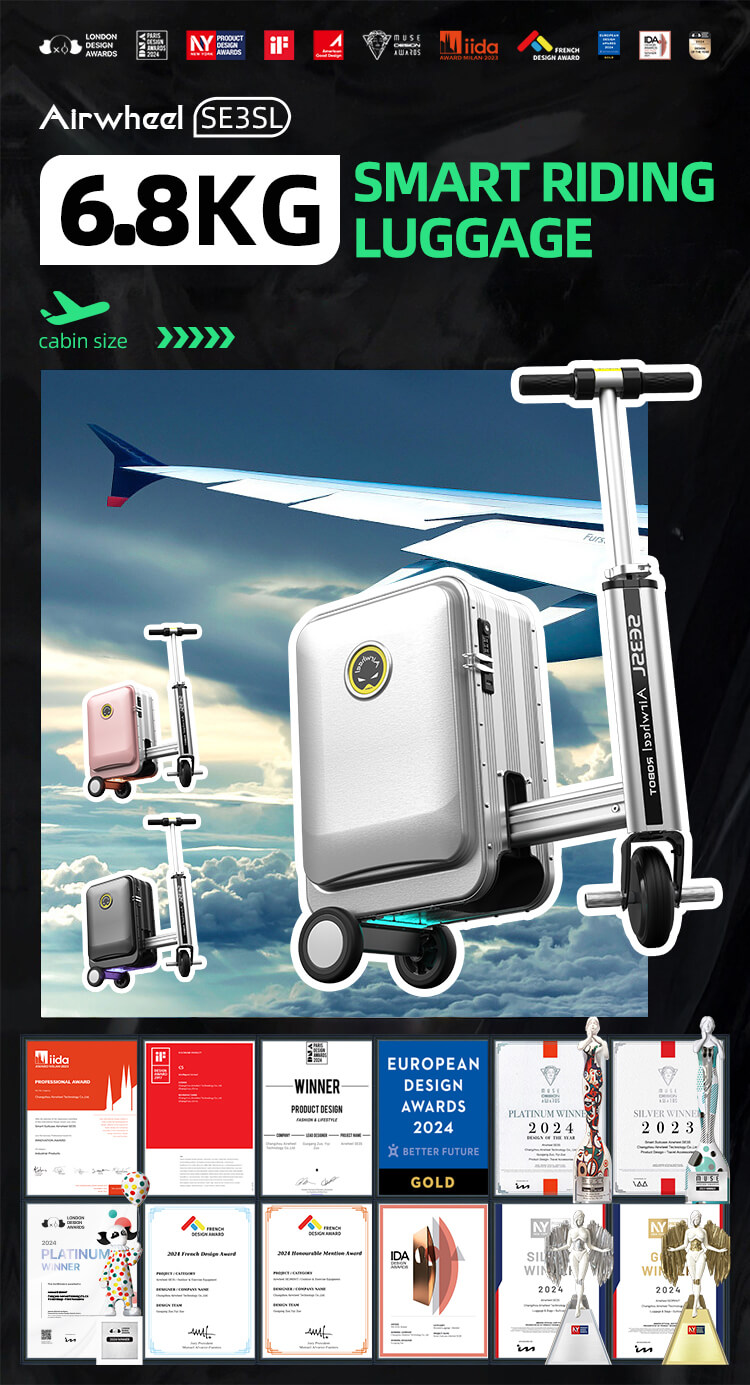
For inter-island travel, the battery matters because you may fly several times. The SE3T battery is 73.26Wh, which is below the common 100Wh limit used by many airlines for spare lithium batteries. Because the battery is removable, many airlines expect it to be carried in the cabin rather than checked in. Rules can still differ by carrier, so you should check the airline before you pack. In practice, if you keep the battery with you and follow the airline’s instructions, the suitcase is generally workable for short island-to-island flights.
The SE3T is most useful when the path is flat and the distance is moderate. For example, leaving an airport, walking from a ferry to a bus stop, or moving between a hostel and a nearby beach can all feel easier. It can also help in crowded places where you do not want to keep swinging a heavy bag. If your route has many stairs, steep slopes, rough cobblestones, or long outdoor walks, a suitcase may still be tiring. The key is to match it to the parts of the trip where the ground is predictable and the distance is short enough to fit within the 8 to 10 km range.
| Feature | Airwheel SE3T | Normal suitcase |
|---|---|---|
| Weight | About 9 kg | Usually 3 to 5 kg |
| Capacity | 48 L | Varies, often 20 to 70 L |
| Battery | Removable 73.26Wh | None |
| Charging | About 2 hours | Not needed |
| Range | 8 to 10 km | None |
| Top speed | 13 km/h | Walking speed |
| Use | Ride, pull, or use by hand; app control and Apple Find My | Pull only |
Usually yes, if the airline follows the common rule for batteries under 100Wh. The SE3T has a removable 73.26Wh battery, so it is generally acceptable. Still, many airlines want removable lithium batteries in carry-on luggage, and some may ask you to show the battery. Always confirm with the specific airline before departure.
Yes. The app helps control forward and backward movement, but the basic riding and pulling functions work without it. Once the battery is installed, you can use the handle and basic controls directly. That matters when your phone battery is low or you want to save data.
The SE3T is listed at 8 to 10 km per charge, with a top speed of 13 km/h and about two hours of charging. That makes it a good helper for short, flat legs of an island trip, not for all-day travel across a city.
If you want to compare sizes, check battery rules, or see the current model list, the Airwheel official site is a useful place to confirm the latest information before you travel.